Japanese cuisine is known not only for its flavors and ingredients but also for the careful way food is arranged before it reaches the table. The appearance of a dish can influence how diners perceive its freshness, seasonality, texture, and overall character.
Japanese food plating goes beyond simply making a meal look attractive. The arrangement of ingredients, choice of plate, use of color, and amount of empty space can all contribute to the dining experience.
For travelers interested in Japanese cuisine, understanding these visual elements can provide a deeper appreciation of what appears on the table.
What Makes Japanese Food Plating Different
Japanese plating often emphasizes simplicity, balance, and harmony.
Instead of covering an entire plate with food, chefs may intentionally leave areas of empty space. This creates visual separation and allows individual ingredients to stand out.
The plate itself also becomes part of the composition.
Food and tableware work together
A dish is rarely selected randomly.
The shape, color, material, and texture of a plate or bowl can complement the ingredients being served.
A colorful seasonal dish may be placed on a more subdued ceramic plate, while a simple ingredient can be presented on distinctive handmade tableware.
This relationship between food and tableware helps create a cohesive presentation.
The Role of Color
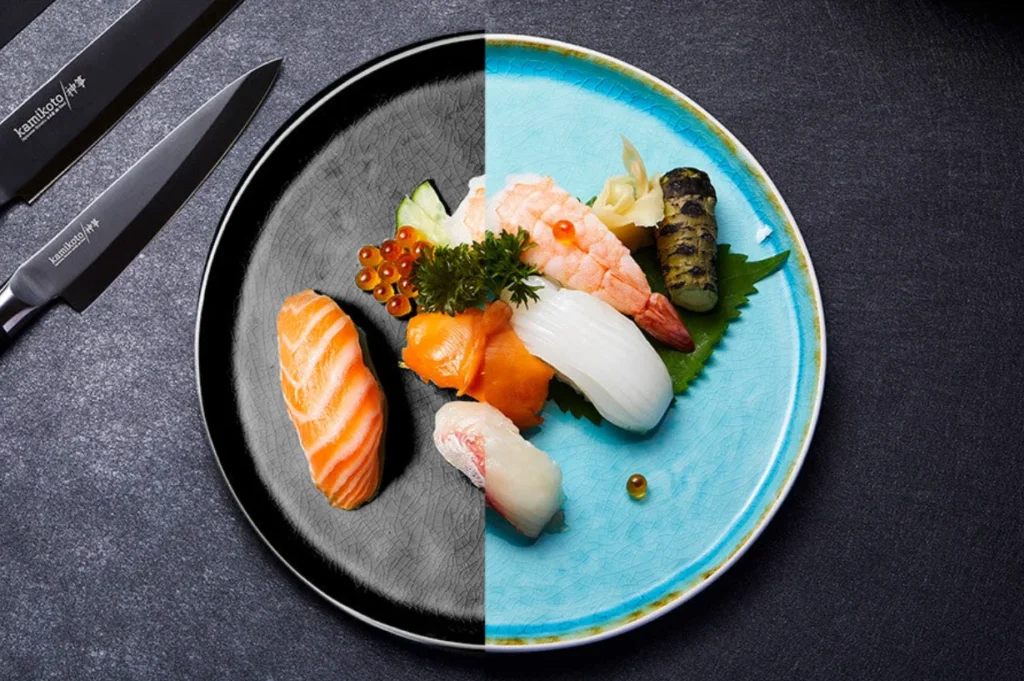
Color is one of the easiest elements to notice in Japanese food presentation.
A well-composed dish may combine several natural colors without making the arrangement feel excessive.
Creating contrast
Different ingredients can provide natural contrasts.
For example, green vegetables can stand out against pale fish, while orange seafood can add warmth to a plate dominated by neutral tones.
Garnishes may also provide small accents of color.
Reflecting the season
Colors can help communicate the season.
Spring dishes may use softer and lighter tones, while autumn presentations can incorporate warmer colors associated with leaves and harvest ingredients.
This allows diners to experience a visual connection with the time of year.
The Importance of Empty Space
One of the most distinctive aspects of Japanese plating is the deliberate use of empty space.
A plate does not necessarily need to be filled completely.
Giving ingredients room
Leaving open areas around ingredients allows each component to remain visually recognizable.
This can make a meal feel lighter and more organized.
Creating balance
Empty space also contributes to balance.
The food may be arranged slightly to one side rather than placed directly in the center.
This asymmetrical approach can create a more natural and dynamic composition.
Asymmetry in Japanese Food Presentation
Perfect symmetry is not always the goal.
Japanese plating can use irregular arrangements to create a more organic appearance.
Natural-looking arrangements
Ingredients may be placed at slightly different angles or heights.
This can make the presentation feel closer to the natural forms of the ingredients themselves.
Avoiding visual repetition
If every element were arranged identically, the plate could feel overly structured.
Small differences in size, direction, and position help create visual movement.
Choosing the Right Plate
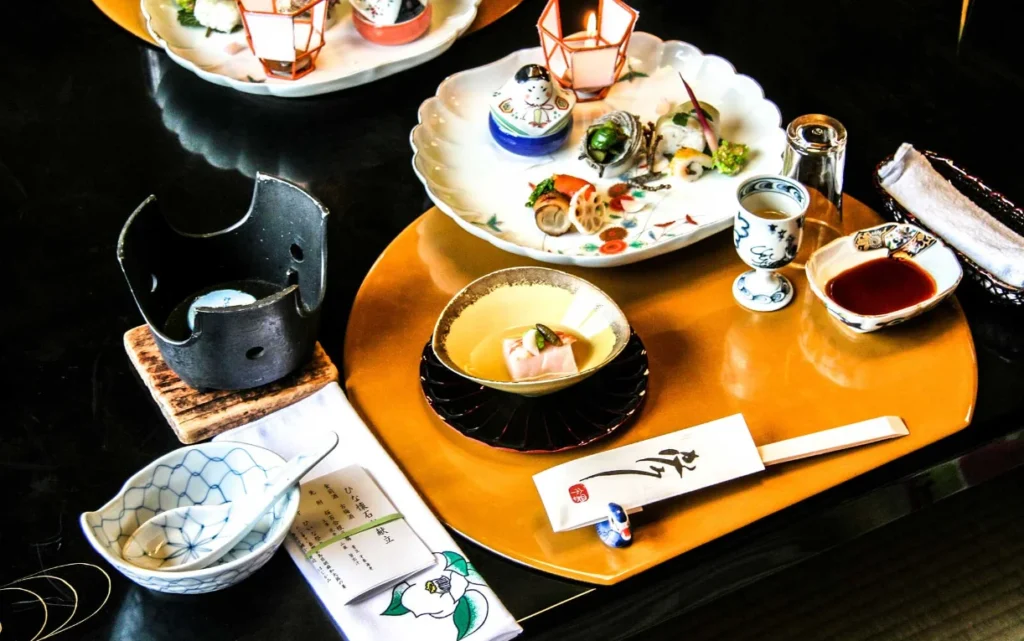
The plate itself can have a major influence on how food looks.
Japanese tableware comes in many shapes, sizes, materials, and colors.
Shape
Round plates create a different visual effect from rectangular or irregularly shaped dishes.
The shape can be selected according to the type of food being served.
Color
The color of the plate can either contrast with or complement the ingredients.
Dark ceramics, for example, can make colorful seafood and vegetables appear particularly vibrant.
Texture
Handmade ceramics may have natural variations in glaze and surface texture.
These imperfections can add character to the overall presentation.
Arranging Ingredients by Height
Japanese plating can also use different heights to create depth.
Flat ingredients may form a base, while other components are positioned slightly higher.
This creates a three-dimensional appearance rather than making the food look completely flat.
However, the arrangement generally remains controlled rather than excessively elaborate.
The Role of Garnishes
Garnishes can provide more than decoration.
Shiso leaves, grated daikon, wasabi, herbs, flowers, and other elements can contribute color, texture, aroma, or flavor.
Garnishes should complement the dish
A garnish should ideally support the main ingredients rather than overwhelm them.
Small details can make a significant visual difference when used carefully.
Seasonal garnishes
Some garnishes can also reinforce the season.
Flowers, leaves, or other natural elements may be used to create a stronger connection between the meal and the time of year.
Seasonal Food Plating
Seasonality is closely connected with Japanese culinary presentation.
The appearance of a dish can change according to the ingredients available during different periods of the year.
Spring plating
Spring presentations may incorporate delicate colors, young vegetables, herbs, and floral elements.
The overall appearance can feel light and fresh.
Summer plating
Summer dishes may emphasize cool colors and refreshing ingredients.
Glassware, chilled dishes, and lighter arrangements can contribute to a sense of freshness.
Autumn plating
Autumn offers naturally warm colors through ingredients such as mushrooms, pumpkins, root vegetables, and seasonal fish.
Tableware with earthy colors can complement these ingredients.
Winter plating
Winter presentations can feature richer colors and hearty ingredients.
Hot dishes, seafood, root vegetables, and warming preparations may create a stronger sense of comfort.
Food Texture and Visual Composition
Texture is another important part of the presentation.
A dish can combine smooth, crispy, soft, firm, and delicate elements.
The contrast can be experienced visually before the first bite.
Combining different textures
For example, a soft seafood ingredient can be paired with crisp vegetables or crunchy toppings.
This creates contrast both in the mouth and on the plate.
Natural textures
Ingredients do not always need to be transformed into perfectly uniform shapes.
Natural textures can contribute to the visual character of the dish.
Plating Different Types of Japanese Food
Different dishes require different approaches to presentation.
Sushi
Sushi presentation often emphasizes precision and simplicity.
The shape and color of each piece can remain visible, with minimal decoration needed.
Sashimi
Sashimi can use carefully arranged slices alongside shiso, daikon, wasabi, and other accompaniments.
The arrangement can highlight differences between fish varieties.
Tempura
Tempura can emphasize height and contrast.
Crispy pieces may be arranged so that each item remains visible rather than stacked heavily on top of one another.
Kaiseki-style dishes
More elaborate multi-course dining can place particular emphasis on seasonal ingredients, tableware, colors, and progression.
Each course can present a different visual composition.
Regional Influences on Japanese Plating
Japanese food presentation is not completely uniform across the country.
Regional ingredients and culinary traditions can influence the way dishes are prepared and served.
A seafood-focused meal in Hokkaido may have a different visual character from a seasonal vegetable dish in Kyoto.
These differences make regional dining experiences especially interesting for travelers.
Appreciating Japanese Plating as a Traveler
Visitors do not need professional culinary knowledge to appreciate Japanese food presentation.
Before eating, take a moment to look at the dish.
Notice:
- The arrangement of ingredients
- The colors
- The shape and material of the plate
- The use of empty space
- Seasonal elements
- Differences in texture
- How the dish relates to other courses
These details can reveal the thought that went into preparing the meal.
Travelers who want to understand the broader relationship between presentation and Japanese dining traditions can also explore this japanese food presentation guide.
Why Japanese Plating Enhances the Dining Experience
Presentation can influence expectations before the first bite.
When ingredients are arranged carefully, diners may become more attentive to their colors, textures, aromas, and individual characteristics.
This encourages a slower and more deliberate approach to eating.
The visual composition therefore becomes part of the overall sensory experience rather than a separate decorative element.
Final Thoughts
Japanese food plating demonstrates how cuisine can combine taste, visual design, seasonality, and cultural tradition.
Color, empty space, asymmetry, tableware, texture, and seasonal ingredients can all contribute to the appearance of a dish.
For travelers, paying attention to these details can make Japanese dining experiences more rewarding.
Whether enjoying simple sushi, fresh sashimi, seasonal vegetables, or an elaborate multi-course meal, the presentation offers another way to understand the care and philosophy behind Japanese cuisine.